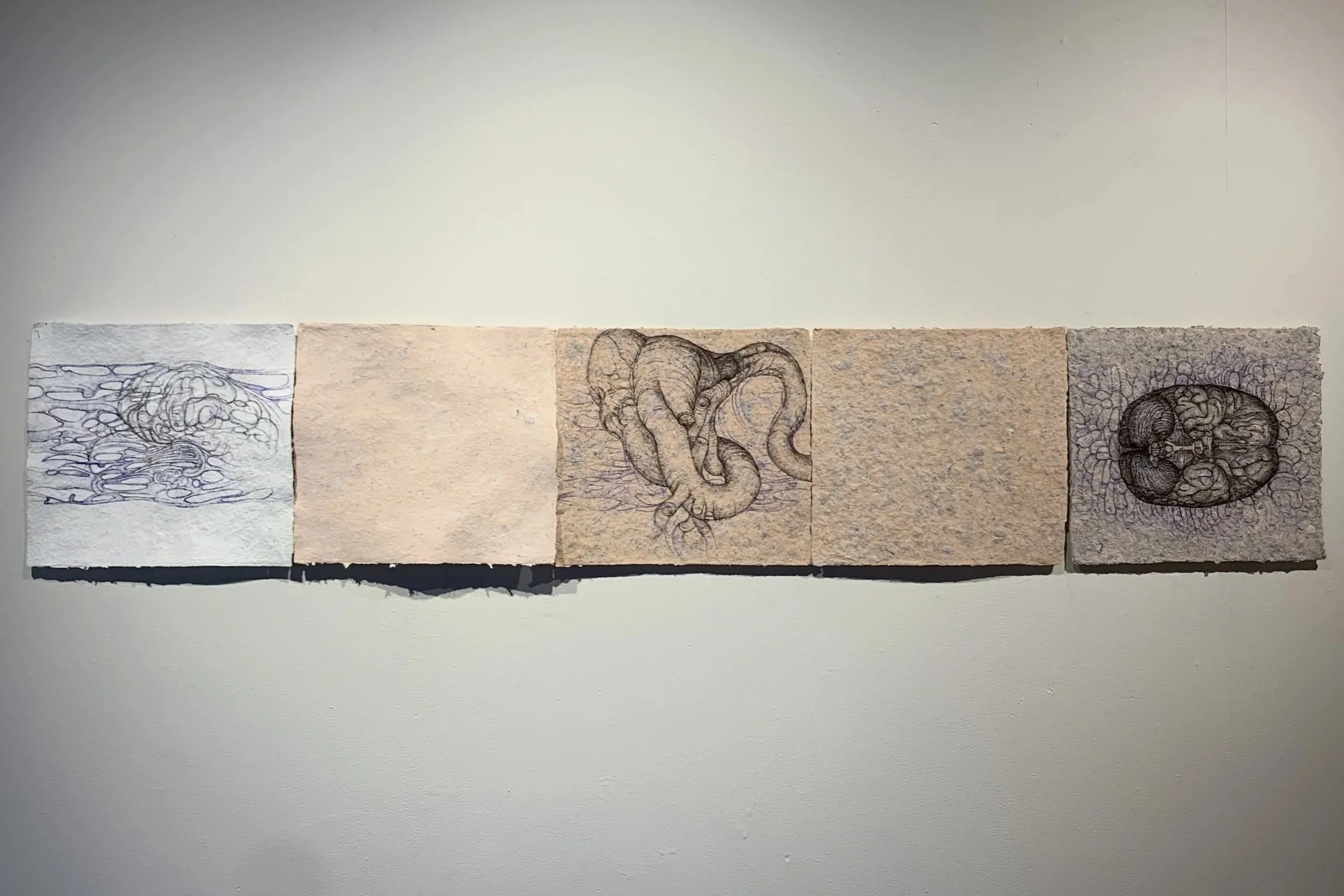



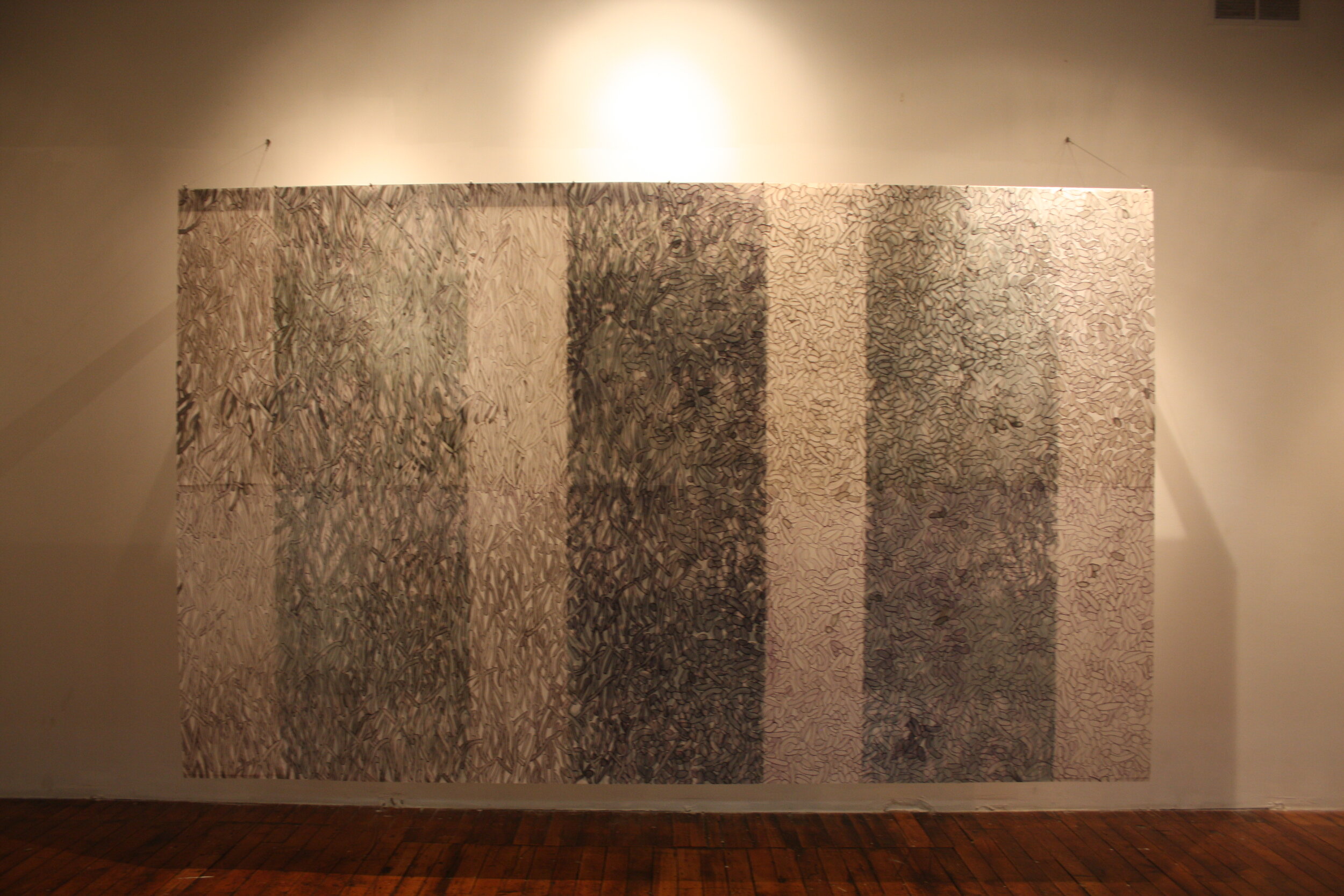


Work in Progress, Mixed Media, July 2026
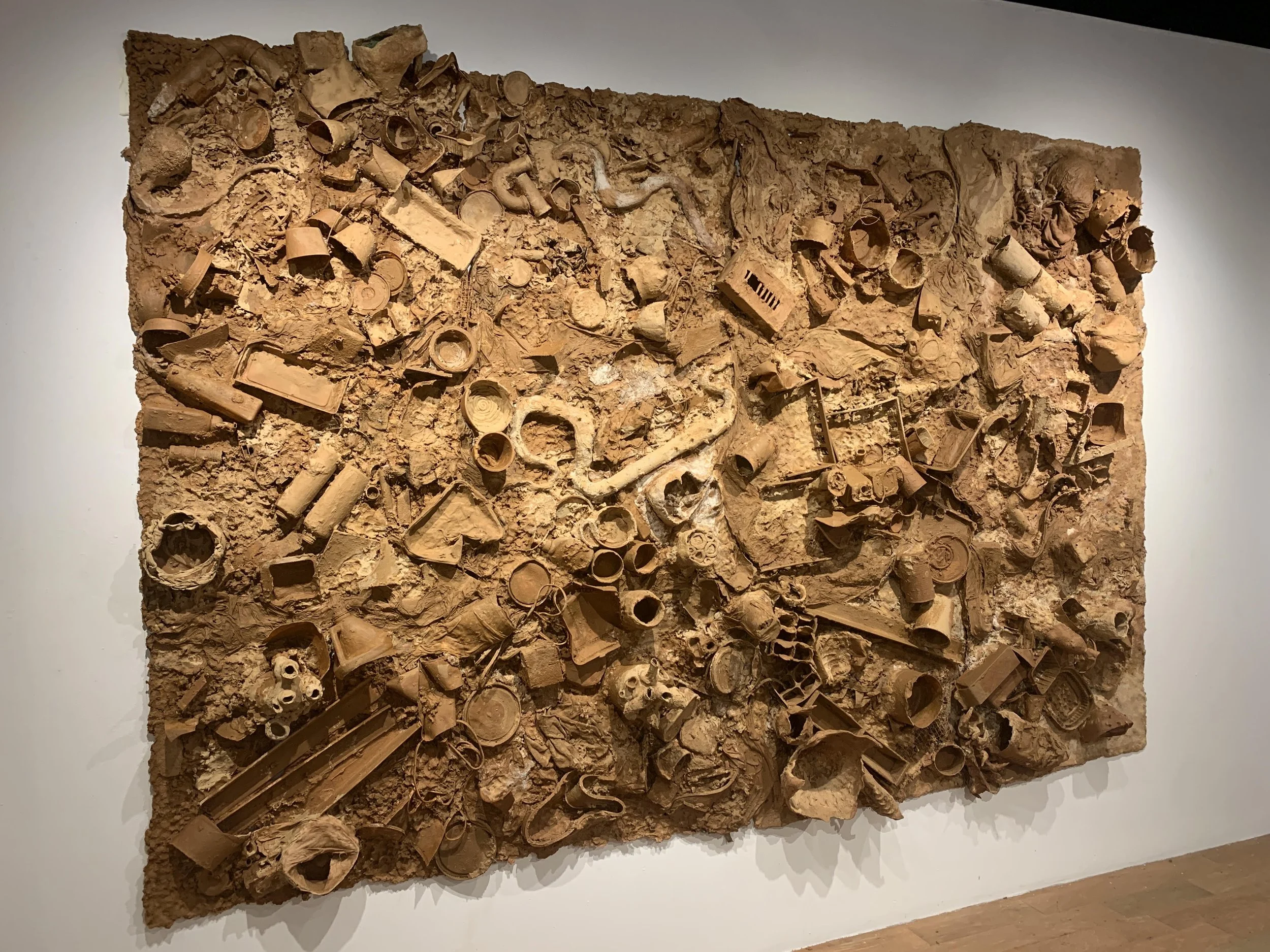
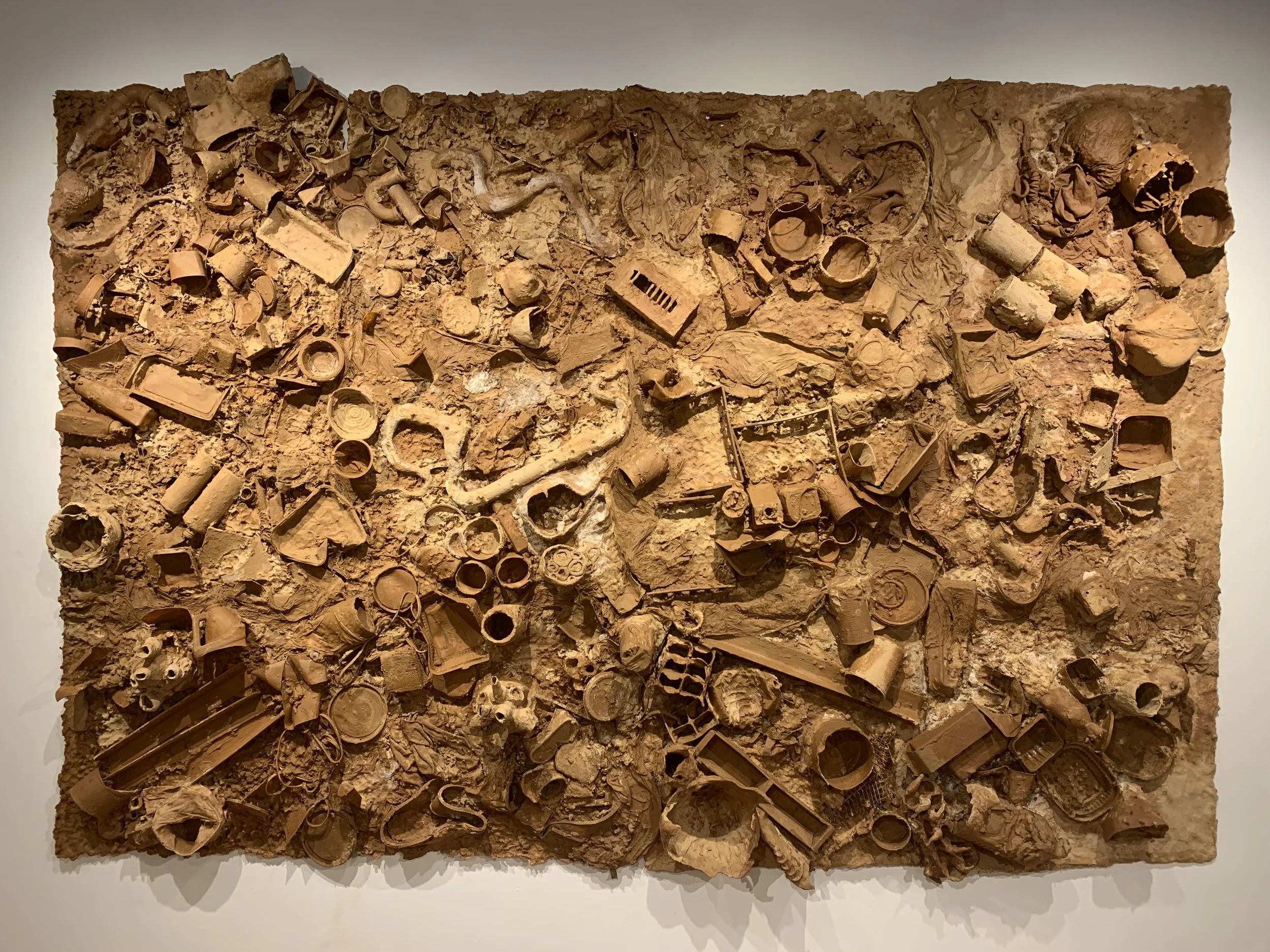
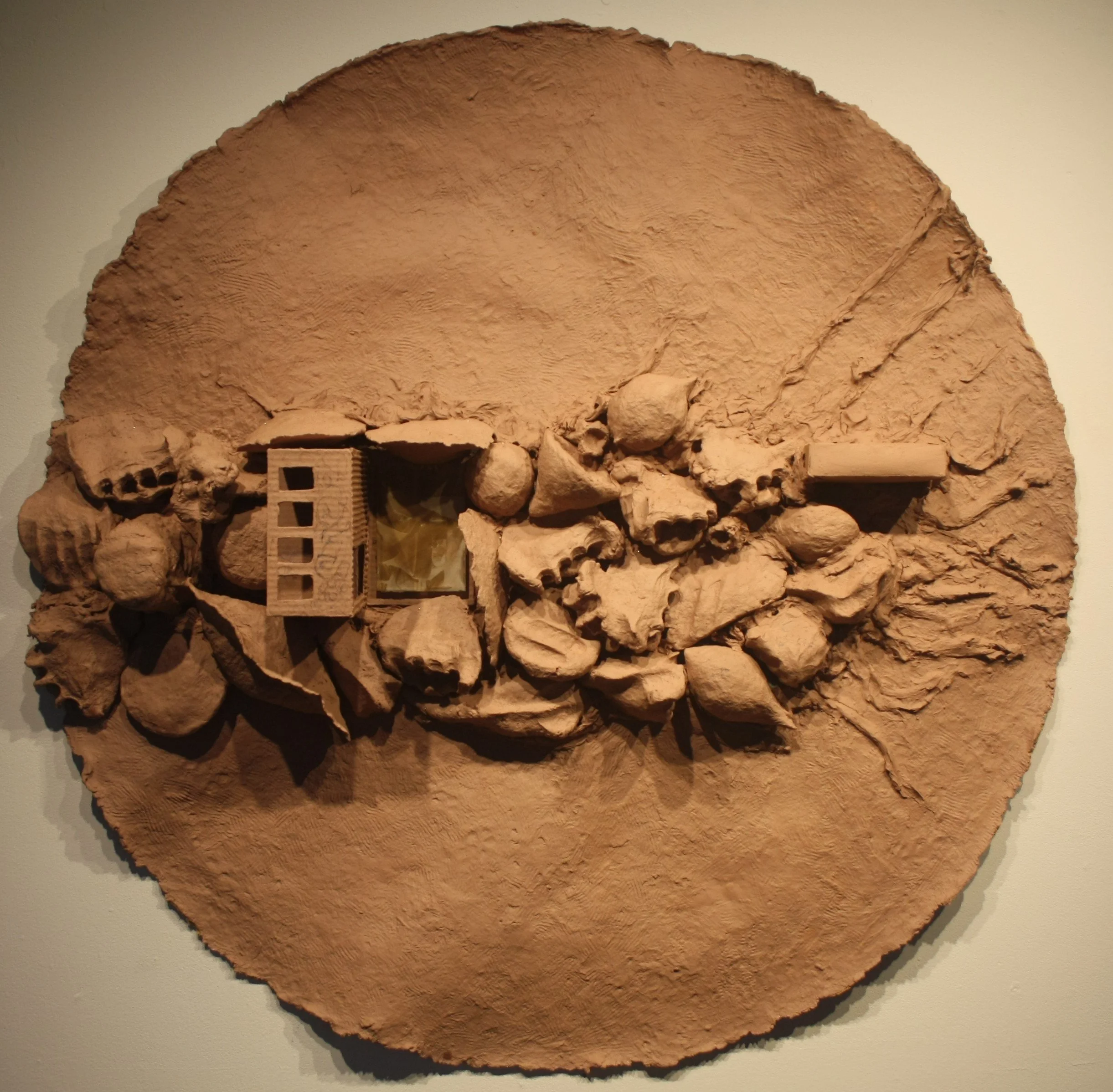
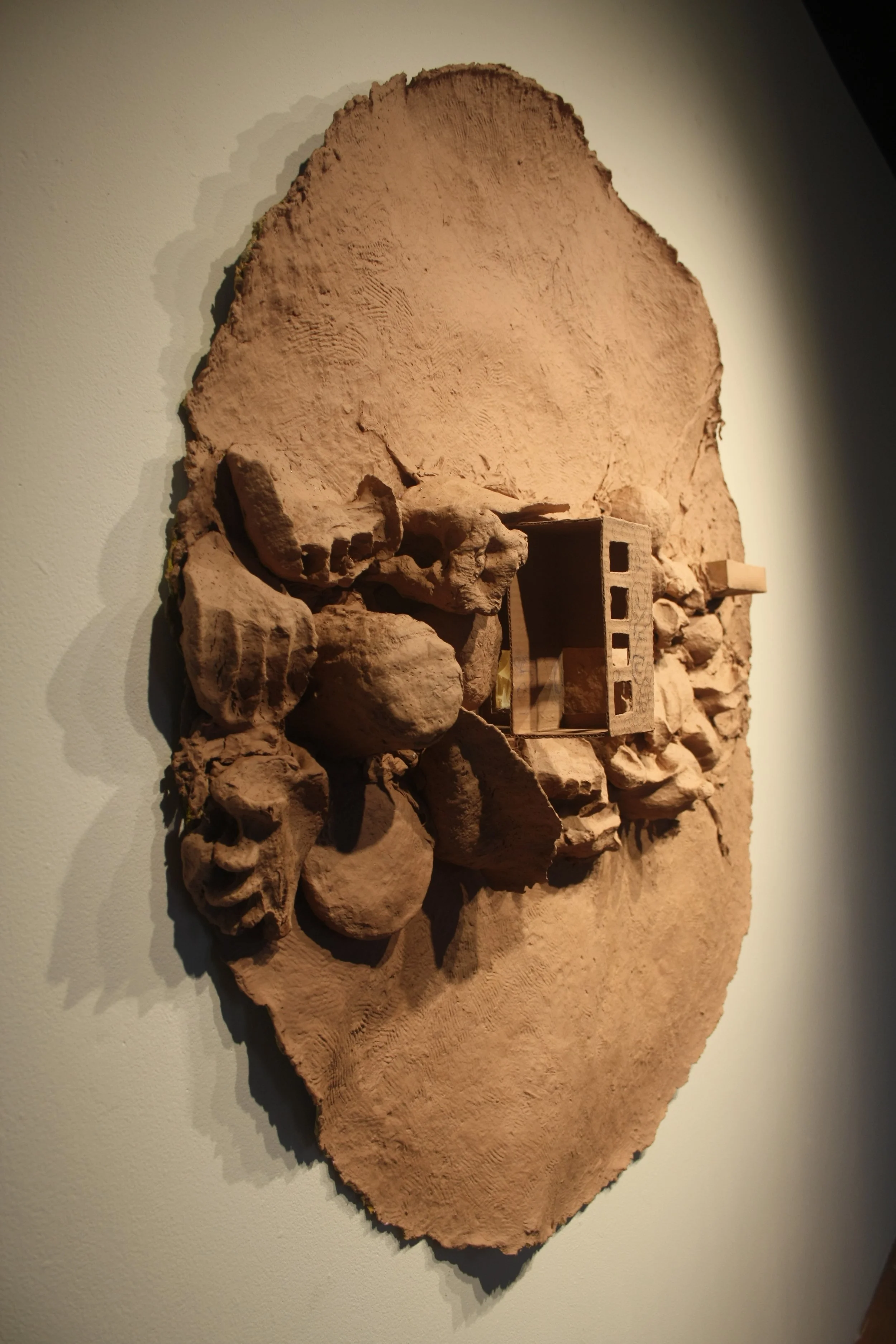
Palingenesis Extincta, Terra Cotta Slip on Handmade Paper Clay sheets with recycled materials, 122 x 82 in., 2026
Palingenesis Extincta, Terra Cotta Slip on Handmade Paper Clay sheets with recycled materials, 122 x 82 in., 2026
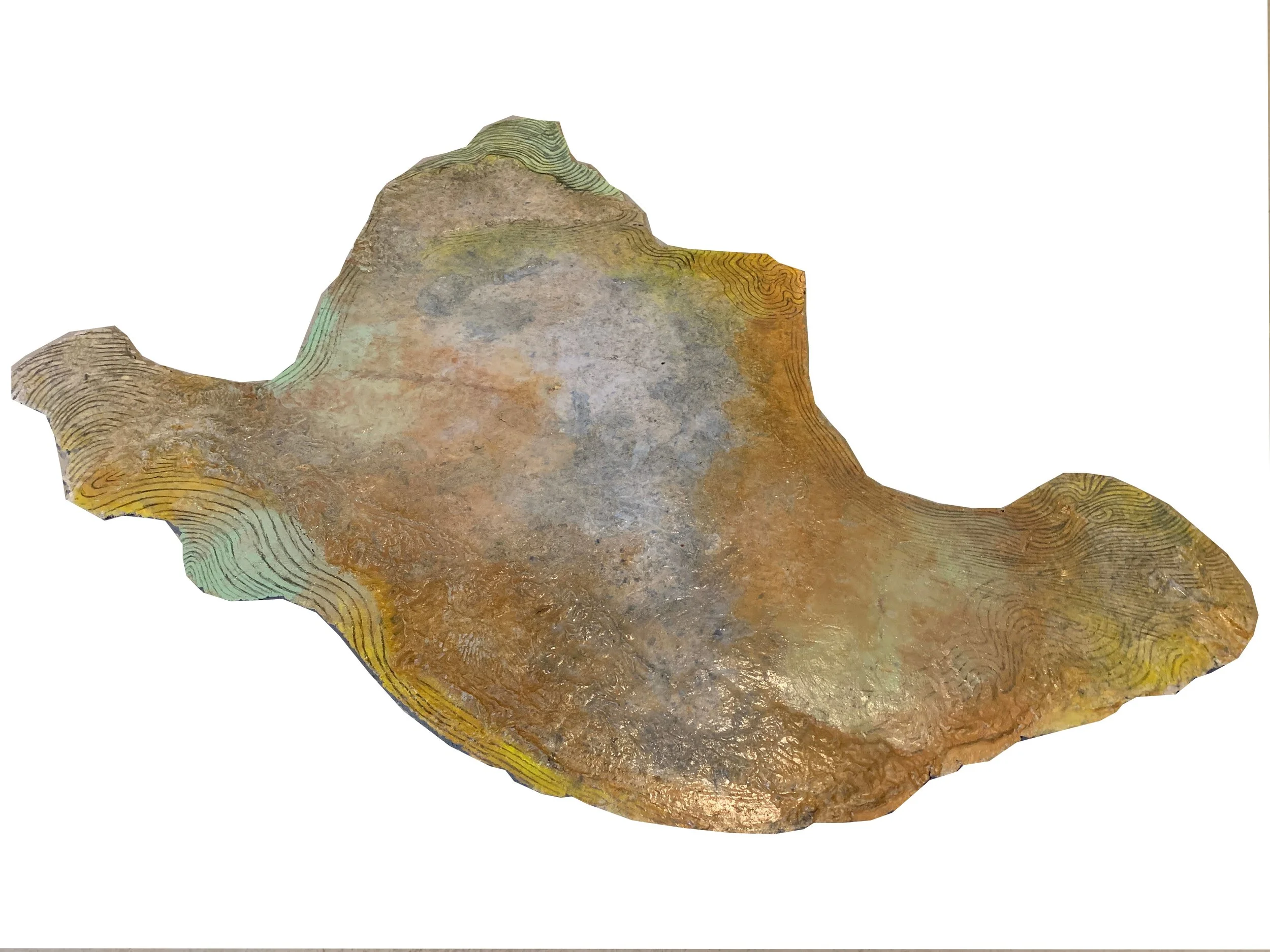
Apeirogaia, Handmade Paper Clay, Acrylic, Graphite, 38 x 32 in. 2026
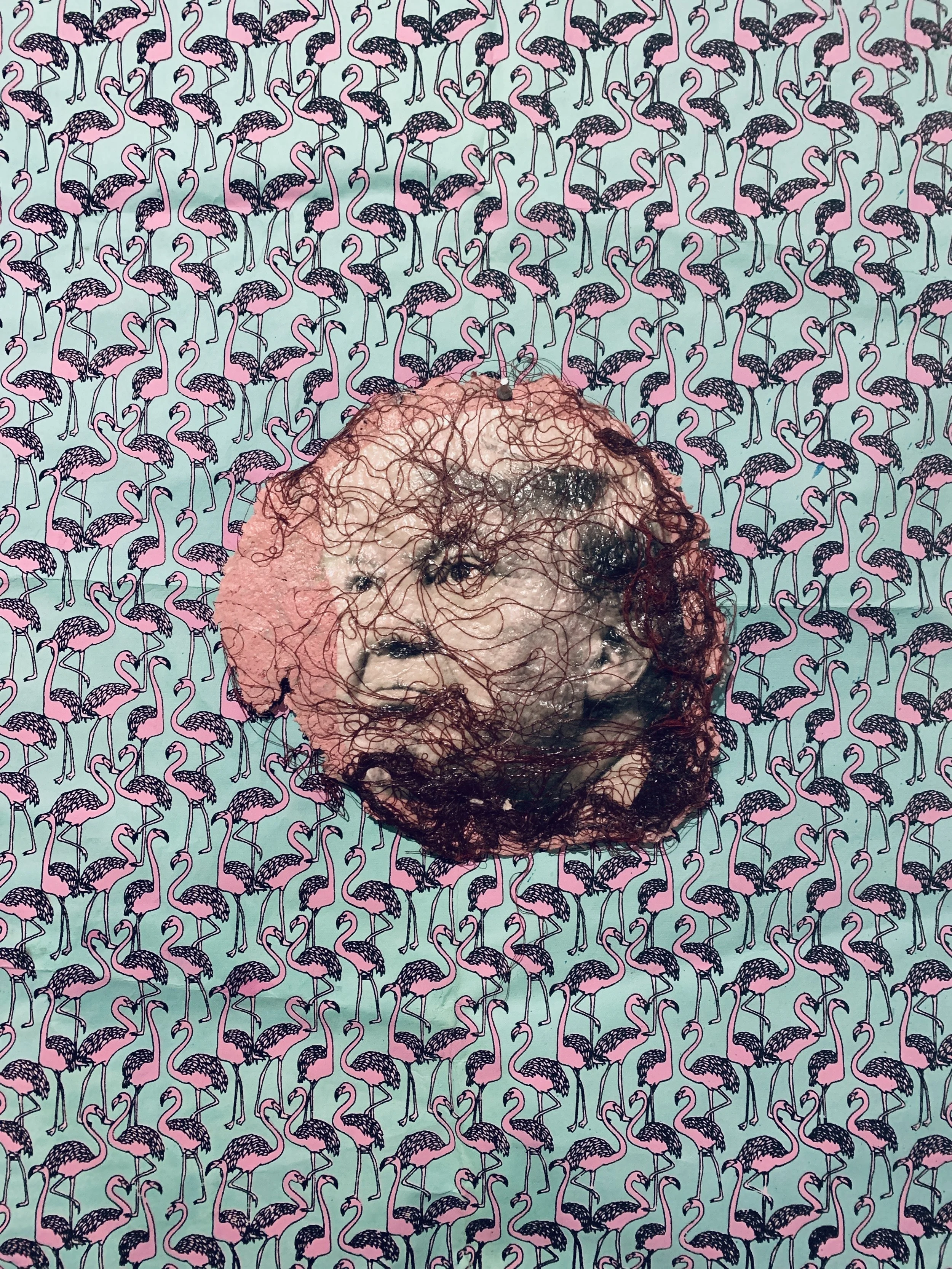
Koskesh, Mixed Media (handmade paper clay, thread, wallpaper, black and white photocopy, 28 x 22 in., 2026
Ngulu Razalas, Digital Photo after Paper clay image, Variable dimensions, 2026
Rethreading the Surface: Mark-Making Ecologies is part of Holobiont Constellation, an ongoing series of experimental drawings and small three-dimensional forms developed with paper clay. This body of work explores experimental approaches to the use of recycled paper, cotton fibers, and thread, transforming these materials into biomorphic structures that evoke the nanoscopic. Through these investigations, I seek to reflect the intricate complexity and interdependence of symbiotic relationships, employing material processes that resonate with the layered, dynamic systems inherent in microbiology.
In the context of climate change, the use of sustainable and recycled materials has become not only an aesthetic choice but an act of ecological responsibility. By reimagining waste materials as transformative materials, this work emphasizes the necessity of reducing our reliance on raw resources and minimizing environmental impact. Paper clay, born from discarded fibers and water, embodies a circular approach to making, one that mirrors ecological processes of renewal and decay. In adopting such materials, I intend to reflect the interconnectedness of human and nonhuman systems, advocating for creative practices that sustain both artistic inquiry and the health of the planet we share.
Reimagining bíōsis, Hand-made Paper Clay, cardboard, Terra-Cotta slip, thread, 39 x 39 inches, 2025
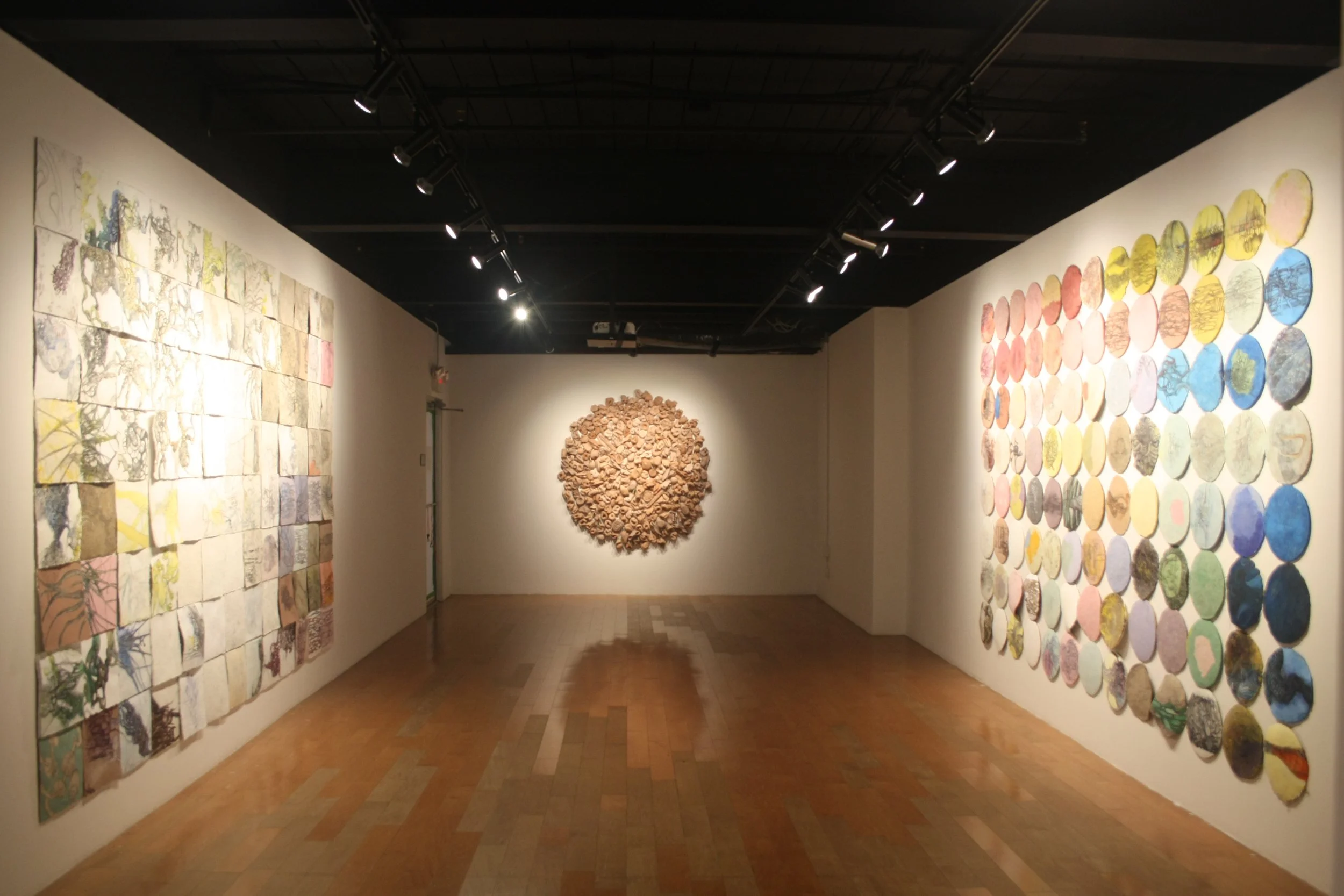
ReThreading the Surface: Mark-Making Ecologies, Installation at the Amy Carberry Gallery, STCC, October 2025
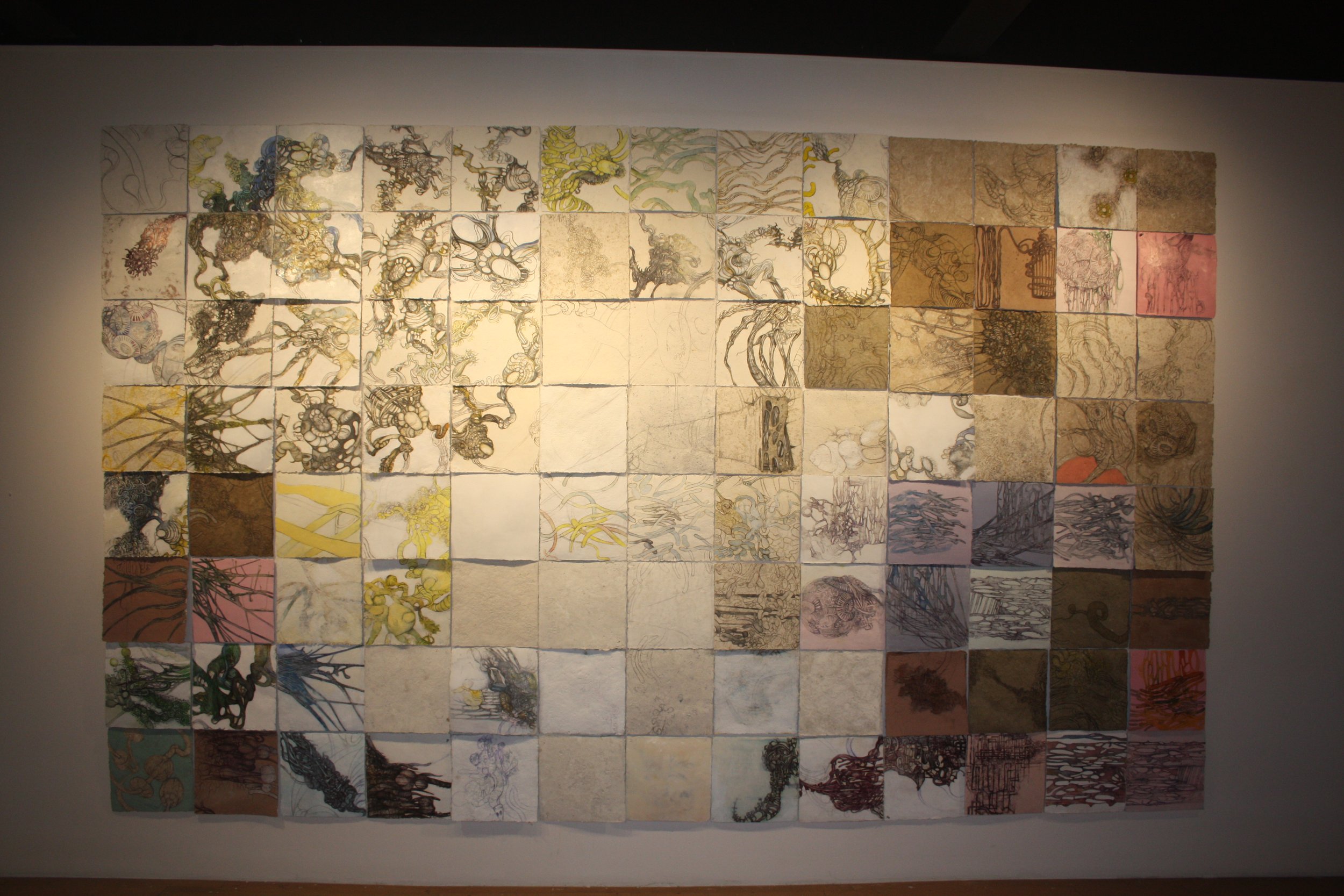
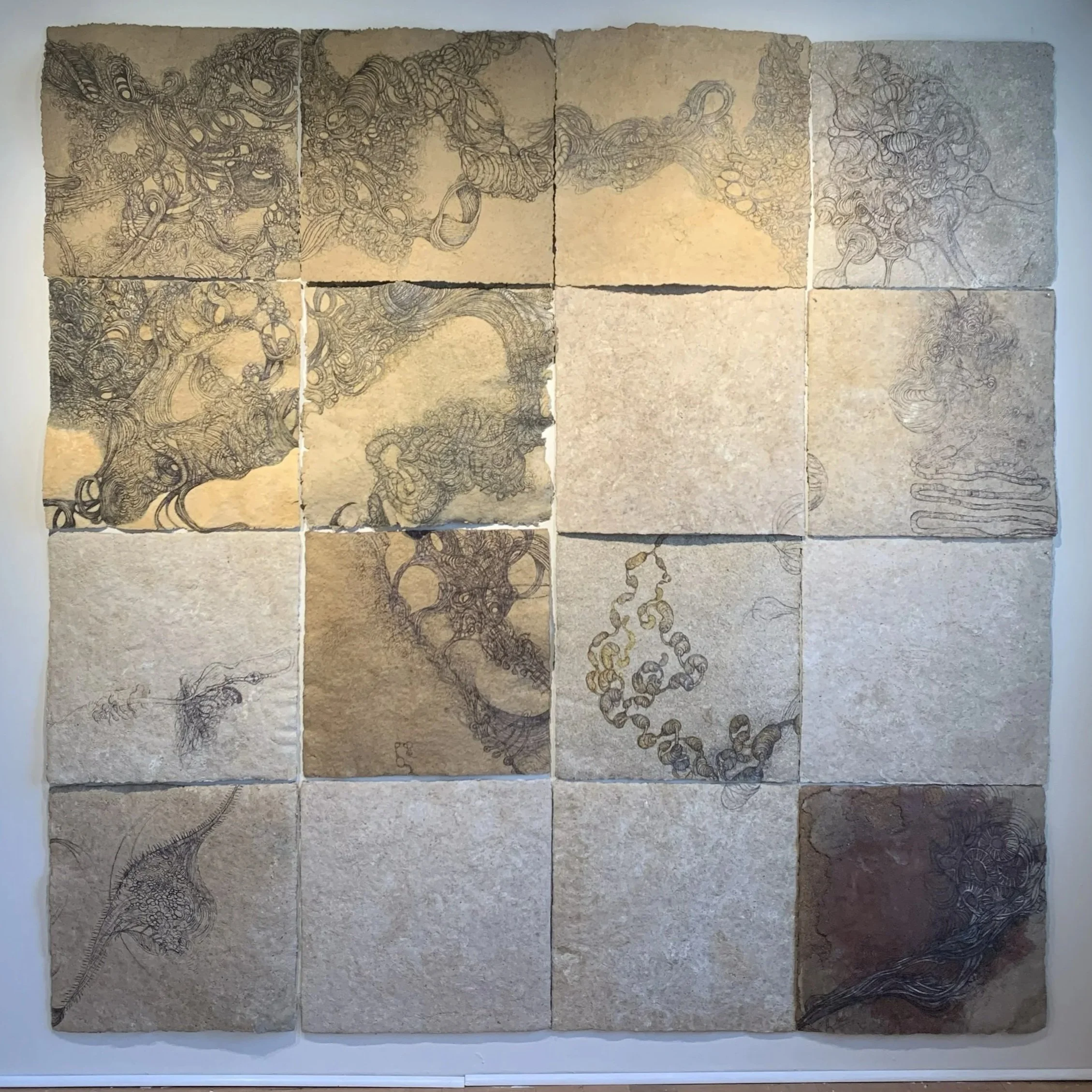
Holobiont Assemblage # 1, Graphite, Pen, and Acrylic on Hand-made Paper Clay, 156 x 96 inches, 2025
Holobiont Assemblage # 2, Graphite, Pen, and Acrylic on Hand-made Paper Clay, 156 x 96 inches, 2025.
Unknown (En)trails, Pen and Graphite on Hand-made Paper (from recycled paper and cotton rag), 13 ½ x 72 ½ inches, 2025
Pathways (Funga), Graphite, Charcoal, and Pen on Paper Clay, approximately 96 x 96 inches, 2025
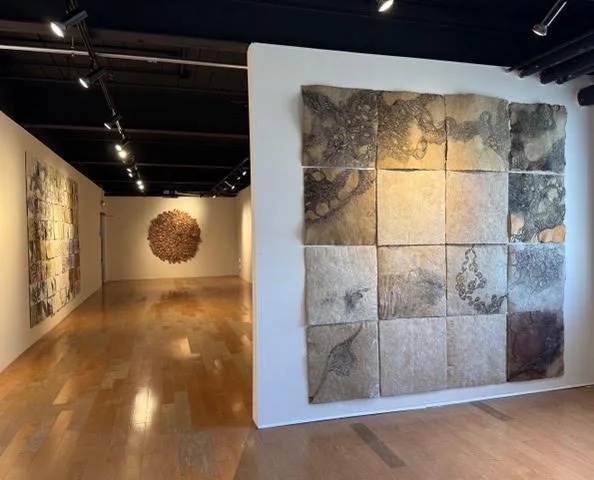
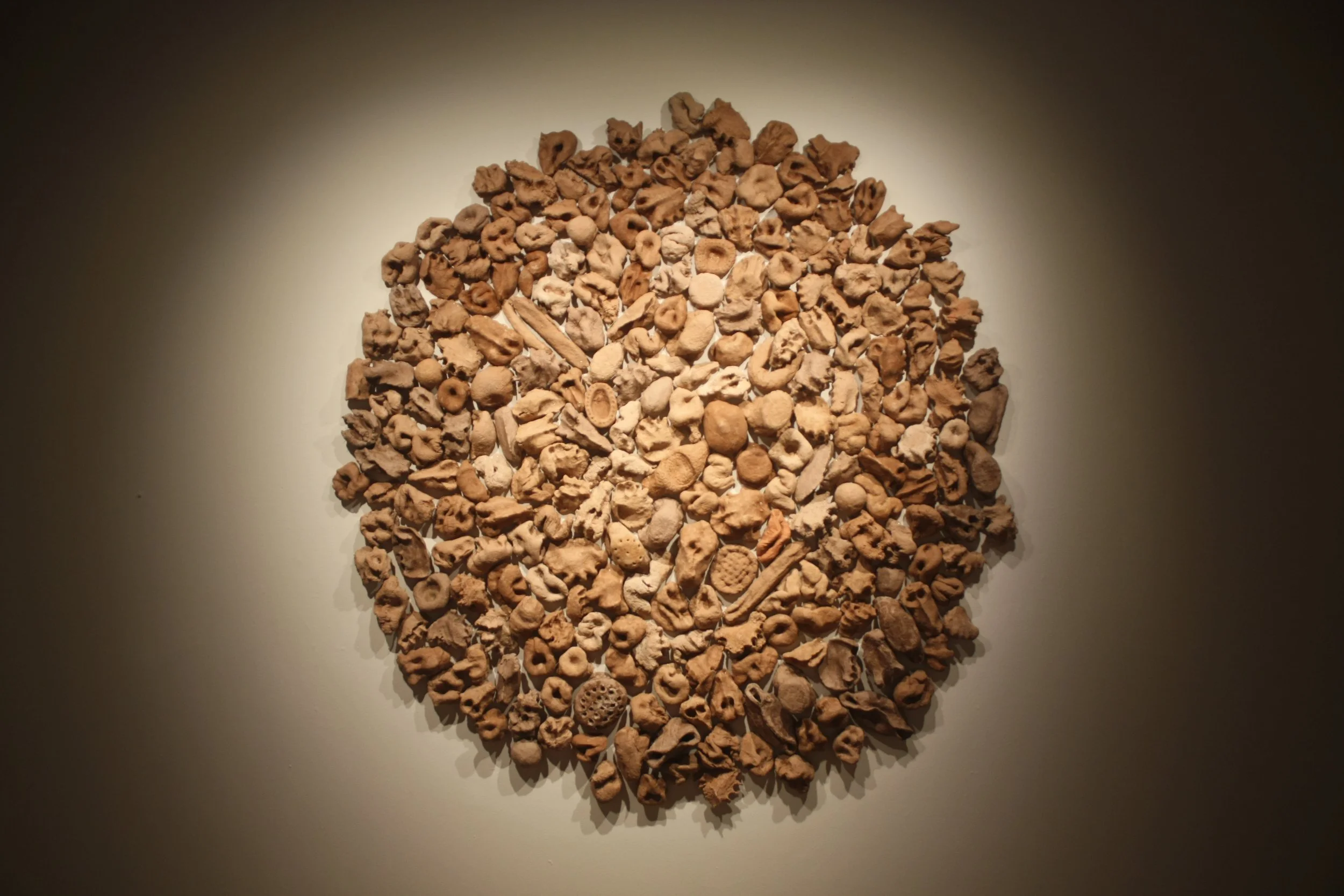
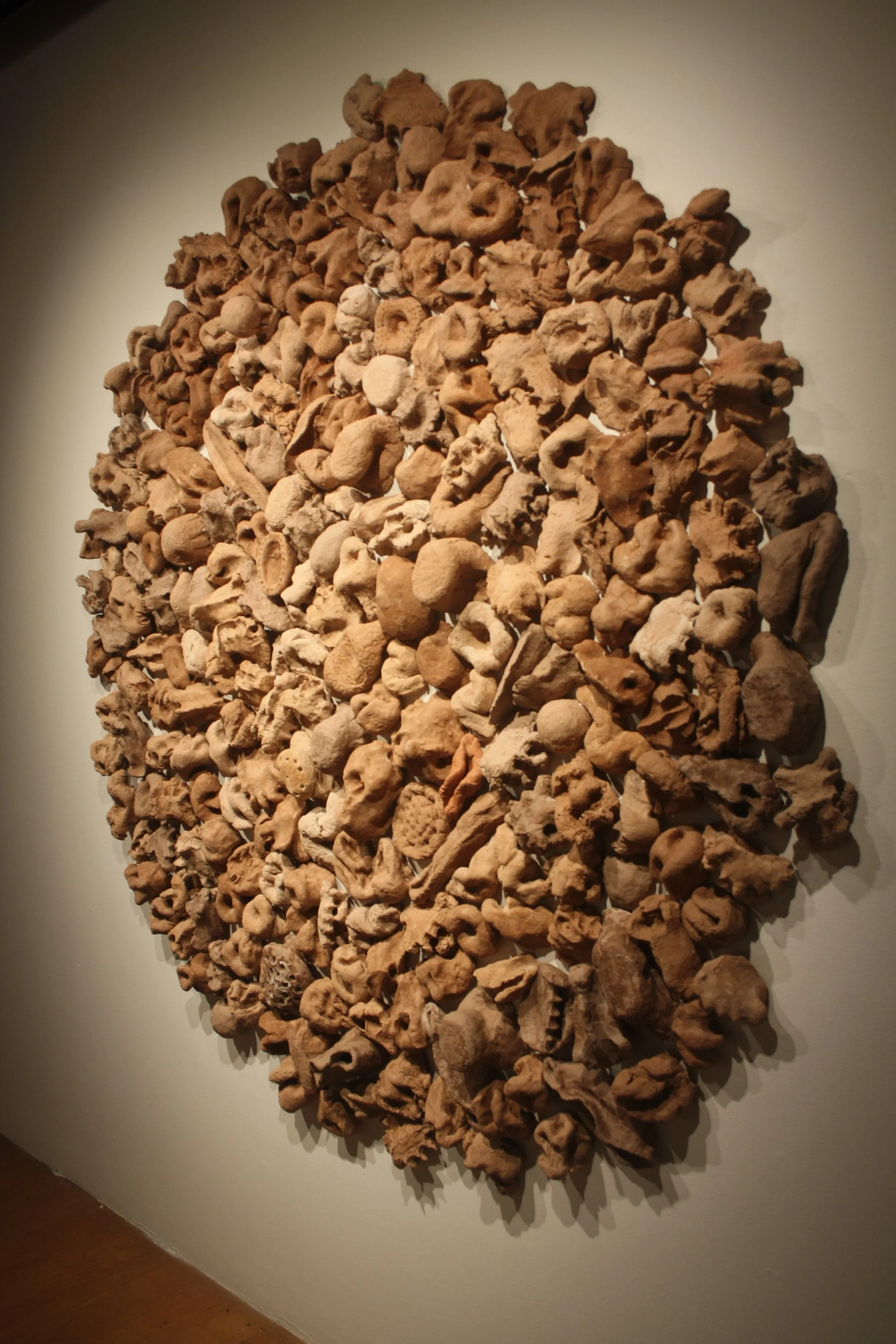
Mutualistic Remnants, Paper Clay and Terra-Cotta slip, approximately 72 x 72 inches, 2025
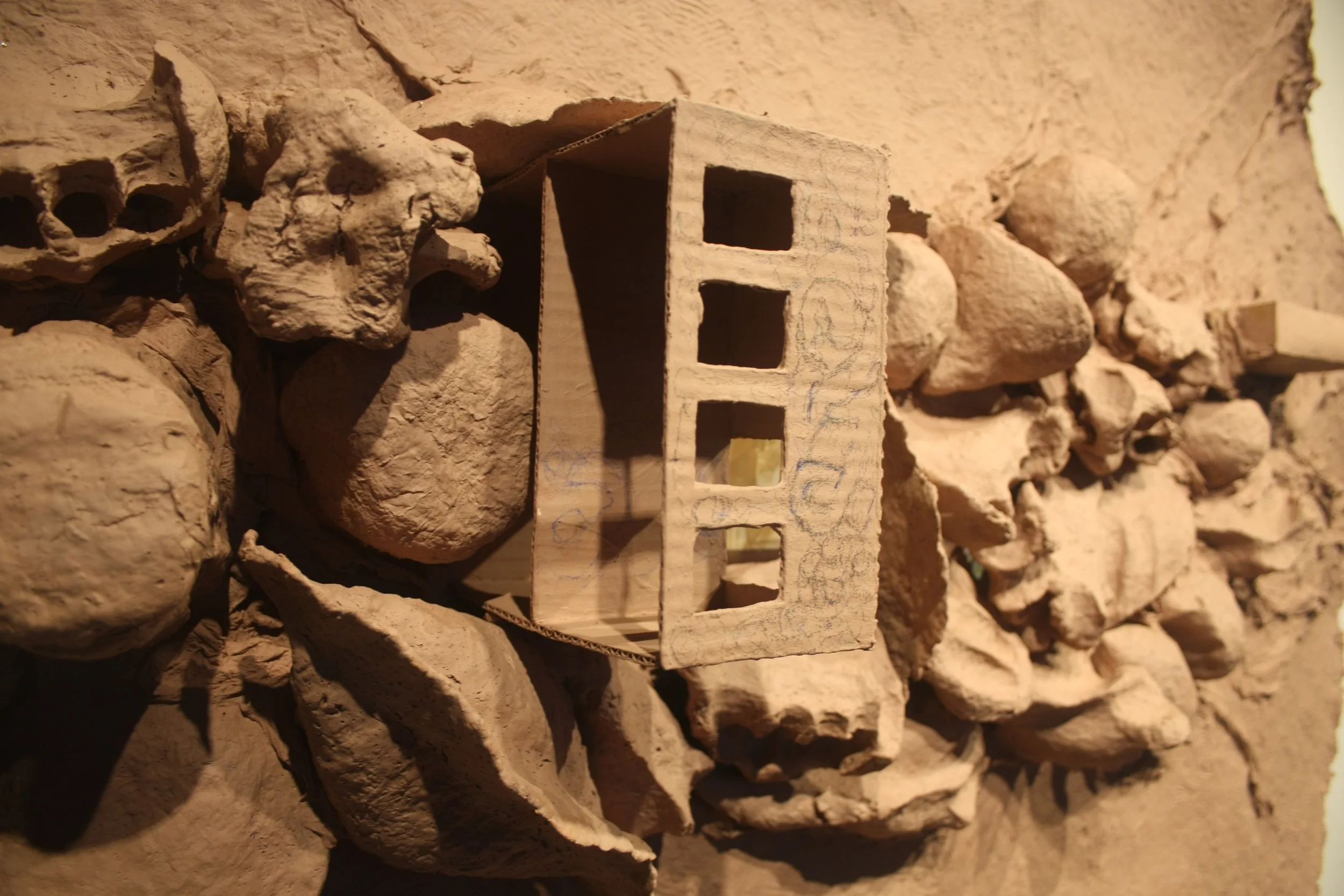
Mutualistic Remnants (Detail), Paper Clay and Terra-Cotta slip, approximately 72 x 72 inches, 2025
Mutualistic Remnants (Detail), Paper Clay and Terra-Cotta slip, approximately 72 x 72 inches, 2025
Gil Scullion, November 10, 2025
Jorge Costa and I met as colleagues, becoming fast friends immediately. Long drives to see remote museums and miles long treks into the woods, rather than studio visits, set the stage for our excited and exasperating discussions on art and life. Costa would describe in depth how he viewed relationships between those elements of the natural world that could be considered apart from human intervention and the components of social interaction that shared characteristics with those non-human interactions. For instance, Costa was the first to introduce me to the idea that the subterranean network of roots and rhizomes results in something like a communications system between plant species. This is a much-debated topic and an area worth further scientific investigation, but whether factual, metaphorical or hysterical it remains an intriguing idea upon which to base an artist’s investigations.
In the case of Costa’s work, I have only had a few opportunities to see this first hand. He works on a modest scale to build larger, integrated structures, and these, requiring more space than Costa has available, are seldom subject to large scale installation. I had to be satisfied with seeing parts in group shows until several years ago, Costa and another colleague of ours, Maggie Nowinski, had a joint installation in the galleries of Springfield College. Both artists contributed sprawling pieces whose manifest intent to continue the sprawl throughout the course of the exhibition.
From October 14-November 14: ReThreading the Surface: Mark-Making Ecologies , a solo exhibition of Jorge Costa’s work provides an excellent opportunity to appreciate his vision in whole in surface, in depth and in time.
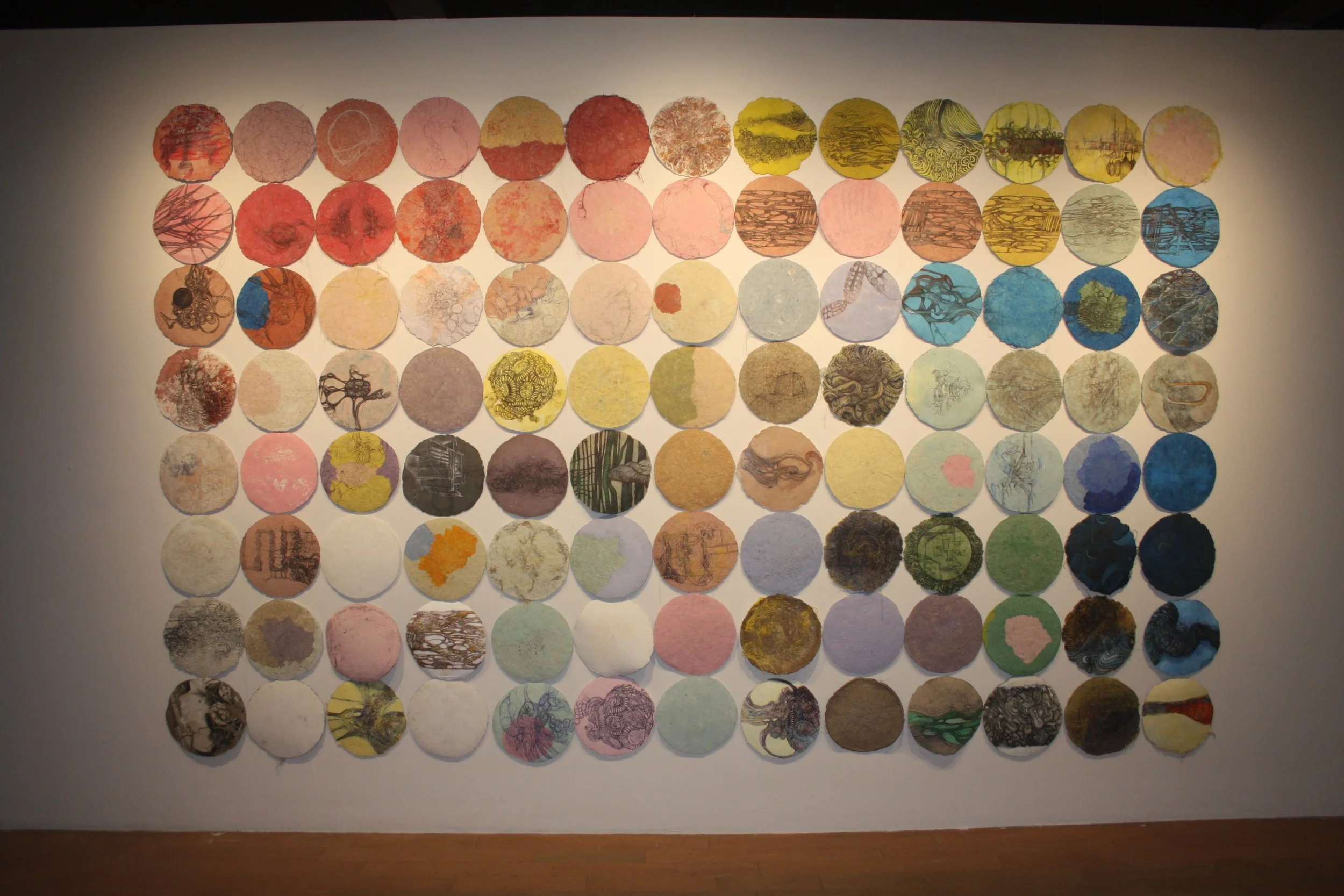
Costa works on panels he fashions from paper pulp and clay. In the drying process these panels, circles or squares (in the case of the work shown here), tend to warp, bend and weave. Installed in a gridded format, the panels begin to suggest growth in the direction of relief space. Corners turn up, edges bend making fissures between units. There is swelling and collapsing. The panels are of various colors and many of them bear drawn images. The images are largely drawn from natural structures viewed from macro and micro perspectives. Spreading root systems, reedy spaces, microbiological communities and, in one case, not-organic, a mechanical contrivance that looks a bit like a ceiling-hung air handling unit.
Inscribed may be the better description of how the images are incised into the dry, earthy surfaces. In some cases, the execution evokes the spirit of ancient petroglyphs. This association is palpable enough that the gridded, earthen whole can be viewed as the organization of an archeological dig, thus introducing the concept of time along with that of vacillating space.
A piece installed at the back of the exhibition further cements the archeological association. Installed on a wall in a reverentially lit gallery, is a circle of hand-shaped, objects fashioned from clay. In a summary scan the individual forms resemble fossilized body parts, or the remains of pots and hand-made tools. Brought into focus the identity of each piece becomes elusive. Regardless the ambiguity of the details the whole is unmistakably an ancient campsite, perhaps visited over the course of millennia.
The number of panels still without images suggests the potential for future growth.
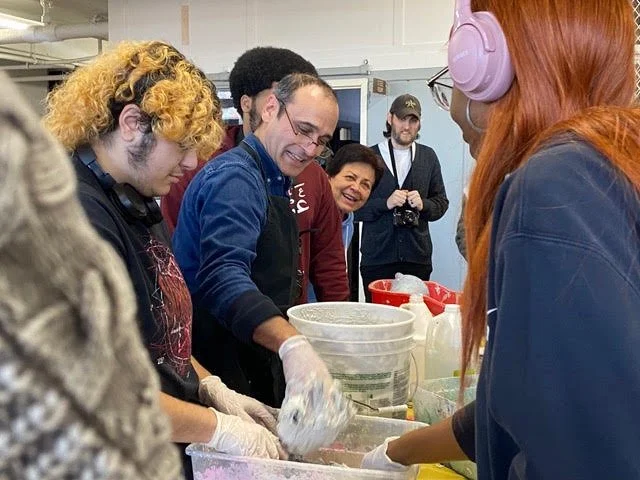
STCC faculty member Jorge Costa shares his artistic techniques seen in his exhibition, Nov. 19, 2025
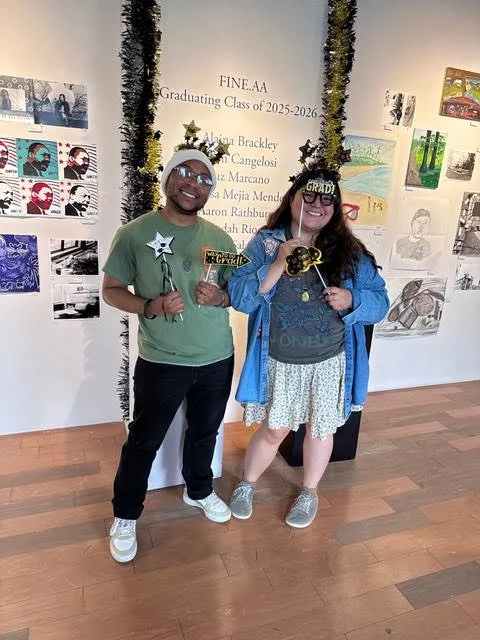
Judah and Julia are ready to celebrate their upcoming graduation from STCC during the student reception on May 9, 2026
Holobiont Constellation
I began experimenting with paper clay sheets while exploring different materials, processes, and surfaces. I gravitated toward materials that are accessible, reusable, recyclable, and readily available.
The type of paper used, paper bags, cardboard, tissue paper, egg cartons, and other reclaimed paper fiber, also dramatically affected the results. Each material carries its own physical properties that, when combined, generate distinct textures and visual experiences. Some sheets dry into rigid, less absorbent surfaces, while others remain softer and readily absorb drawing media.
I also observed how individual sheets often shifted from a flat plane into subtle curves as they dried. This curvature, shaped by factors such as sheet thickness, paper type, and drying methods, including fans, blow dryers, sunlight, or combinations of these, began to activate the viewer's space and alter their plane of vision. Each sheet suggested its own possibilities for mark-making, guided by its unique material characteristics.
My interest in drawing biomorphic forms stems from research in microbiology, particularly the work of evolutionary biologist Lynn Margulis, whose theory of symbiosis in evolution transformed our understanding of genomic development. I am fascinated by the interdependence of bacteria, fungi, plants, and animals. Holobiont Assemblage is an experimental drawing project in progress that references these interconnected life forms and imagines them as a single ecological assemblage.
Biome kubernētikos, Thread embedded in dyed Paper Clay, 13 x 13 in., 2024
Biome, Thread embedded in dyed Paper Clay, 13 x 13 in., 2024
Acidente-Virome, Thread on Dyed Paper Clay, 12” x 12”, 2024
Holobiont Assemblage, Pen, Graphite, and charcoal on (DIY) Paper Paper Clay, 48 x 72 inches, 2023
Incipient, Charcoal and Sharpie on Paper Clay, 8” x 5”, 2024
Incipient, Graphite on Paper Clay Form, 7 x 6 in, 2024
Incipient, Graphite on Paper Clay Form, 7 x 6 in, 2024
Holobiont Assemblage, Acrylic, Ink, Graphite, and pen on Paper Clay, 120 x 90 in., 2023
Holobiont Garden, Graphite on Paper Clay over inkjet print on Yupo paper, 2021
Opening-Biont, Acrylic and Graphite on Paper Clay, 12’ X 12”, 2024
Holobiont Symbiosis, Graphite and Pen on Paper Clay Sheet, 24 x 24 in. 2023
Shelter, Graphite on Paper Clay, 13 x 13 in., 2024
Opening-phage, Acrylic on Paper Clay, 12” x 12”, 2024
Digital Study after Yupo Paper Drawing, 100 x 70 in. 2022
Swarm Biont, Pen and Thread on dyed Paper Clay, 13 x 13 in., 2024
Curve-Biont Thread embedded in dyed Paper Clay, 13 x 13 in., 2024
Ligare, to Bind, Connect, India Ink on Yupo Paper, 175 x 100 in., Installation at MAP Gallery, Easthampton, 2019
Hologenome Shelter, Indian Ink and Acrylic on Vinyl Canvas, 205 x 80 in., Installation at Create Community Gallery, Cold Spring, NY, 2019
Incongruência, Ink, and Pen on Paper Clay, 13 x 13 in., 2013
Hypha/Spitzenkörper, Acrylic on Yupo Paper, 100 x 78 in., Installation at Create Community Gallery, Cold Spring, NY, 2019
Genomic Void, Wall Drawing, 175 x 100 in., William Blizard Gallery, Springfield College, Springfield, MA, 2019
Genomic Void, Wall Drawing, 175 x 100 in., William Blizard Gallery, Springfield College, Springfield, MA, 2019
Untitled, Watercolor and Pen on Paper Clay, 20 cm x 20 cm, 2024